
The Economics of Intelligence
On work, energy, and how AI changes the value of intelligence

“The man who needs a new machine tool and hasn’t bought it is already paying for it.”
I. Intro
Our cultural reaction to AI often feels more performative than analytical. Pessimism about technology has become a kind of moral signal — a way to appear thoughtful without having to think too deeply. In elite circles, the safe position is anxiety. To sound too optimistic about AI risks being cast as naive, even cruel.
But while everyone debates whether AI will take jobs, the better question is how.
Most of what we call “work” is simply the conversion of energy into intelligence, and intelligence into action. We use calories to think, move, and make decisions. Human intelligence is expensive to train and incredibly easy to waste. We spend decades developing it, then pour much of it into low-return tasks — status reporting, formatting, compliance, coordination.
AI lowers the cost of average intelligence and, in doing so, pressures us to allocate our own intelligence to more productive means.
In this essay, I will argue that AI won’t replace jobs; it will strip them down, atomize their component tasks, and force us to reprice and reassign human intelligence to its highest economic and social use.
I’ll break a job down to what it really is, a bundle of task, and look at how both human and artificial intelligence convert energy into output. From there, I’ll propose a way to measure Return on Intelligence — the value created per unit of energy to power both human and artificial intelligence — and use it to ask a critical question: how do we allocate human and artificial intelligence to its greatest yielding tasks?
II. What is a job?
A job is a bundle of tasks.
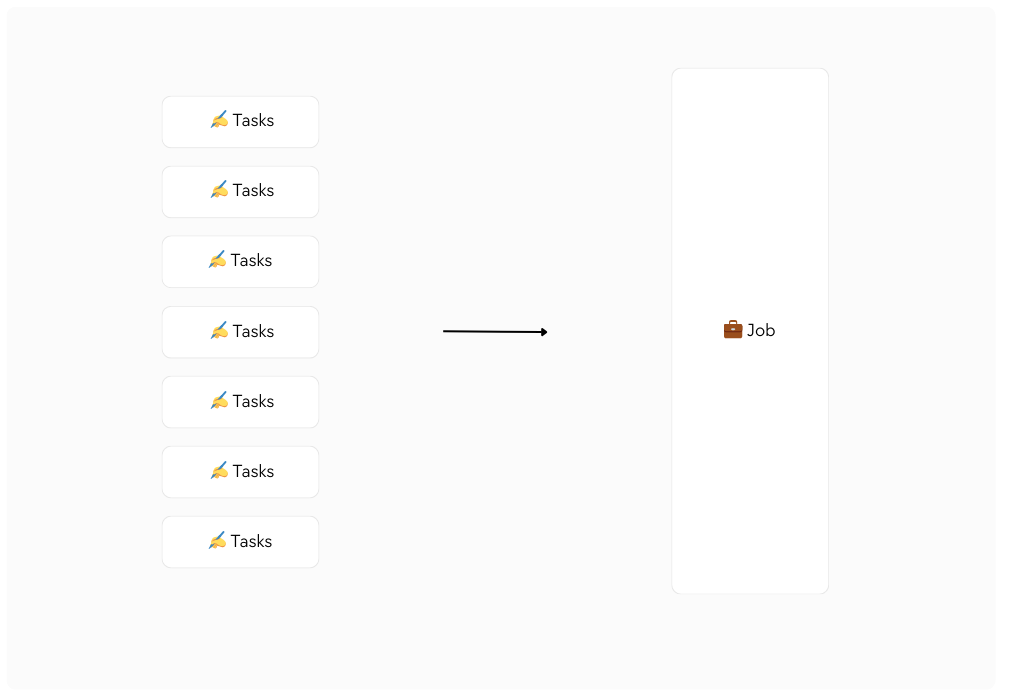
Tasks require thoughts and movements. Thoughts and movements require intelligence.
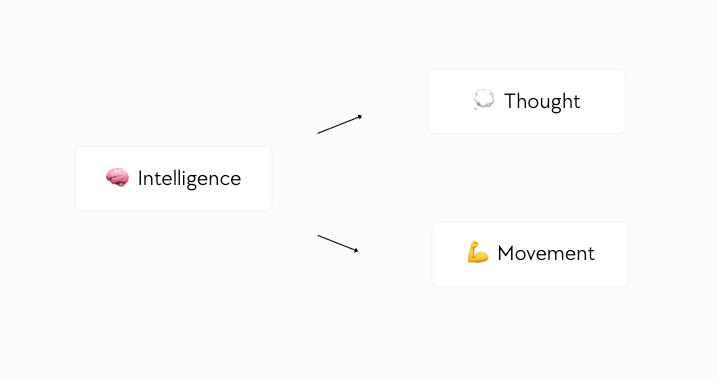
Intelligence requires energy. Energy requires calories.
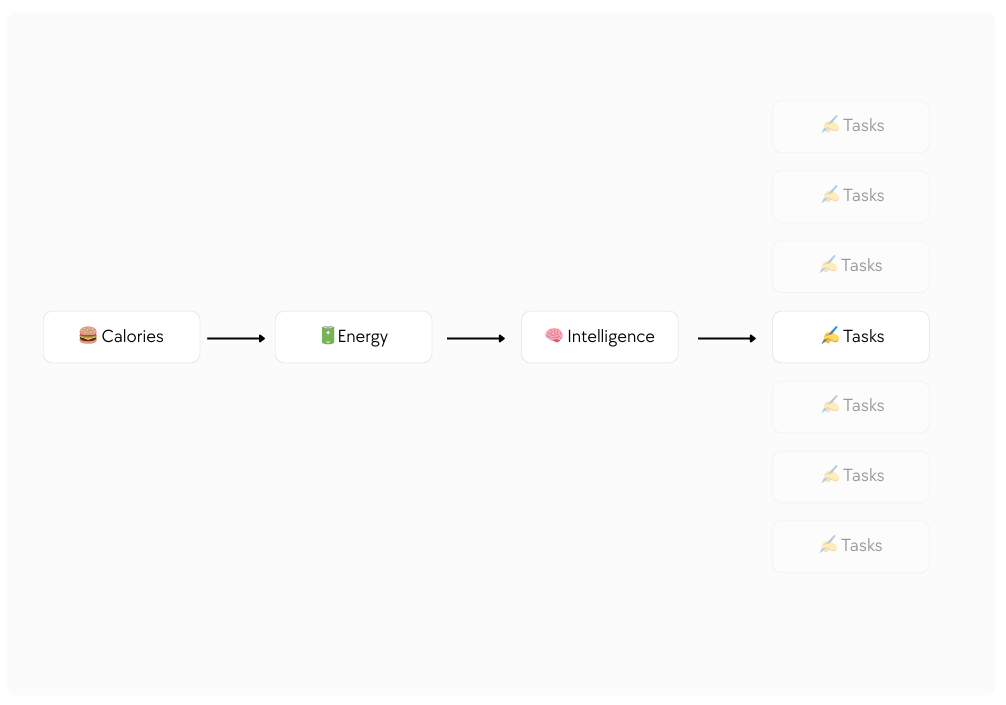
Calories require money. People use the money they earn from their jobs to pay for their calories.
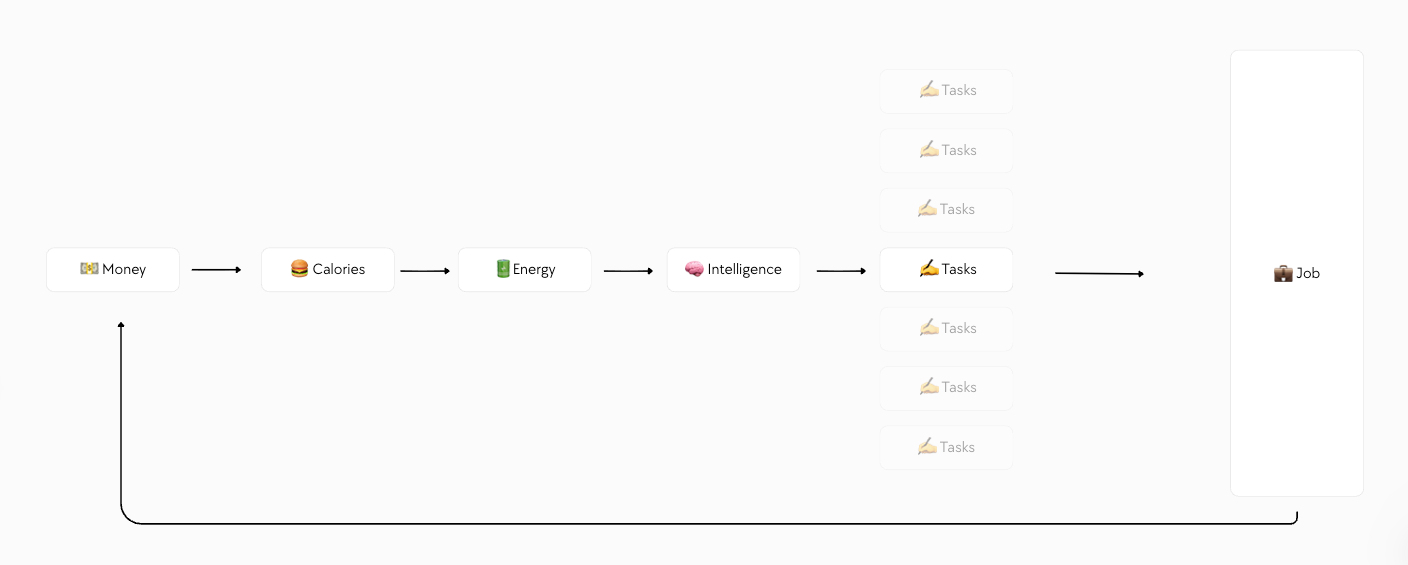
Jobs are, in many ways, an arbitrage on intelligence — people sell their thoughts and movements to perform tasks at a price far greater than the cost required to power such intelligence.
How does this work? We generate calories, power intelligence, and specialize our training — organizing society around jobs that demand thought, movement, or both. Technology has always existed as a tool to allow us to get more leverage out of our intelligence.
This leads to two critical questions:
How much does it cost to power intelligence?
What is the best allocation of that intelligence?
III. The Economics of Intelligence
Like AI, human intelligence requires massive upfront investment before it becomes commercially valuable. We spend about 20 years training a human — while also feeding, educating, and protecting it — before we deem it ready for a job and worth paying for its thoughts and movements.
A rough estimate suggests it costs about $500,000 to ‘train’ a human by age 22 — food, education, housing, healthcare, and time included. With about four million people reaching that age annually, that equates to $2 trillion national investment in training new intelligence each year.

AI systems follow a similar pattern: large upfront fixed costs to produce intelligence that is commercially valuable and can be deployed cheaply on the margin. This process is expensive. Training cutting-edge models like Grok 4 or GPT-4 costs up to $500 million in compute, energy, and labor.
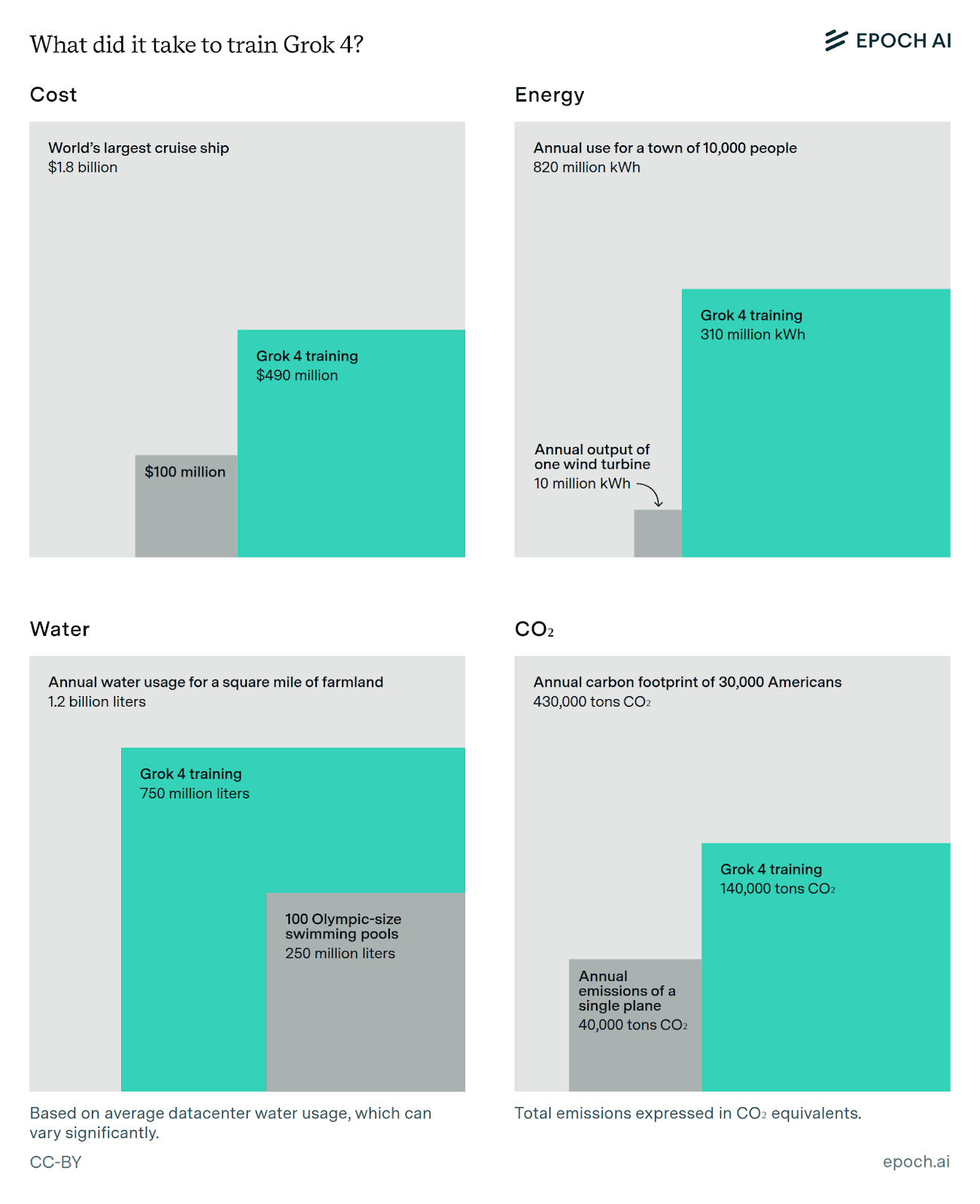
And consumes significant energy.
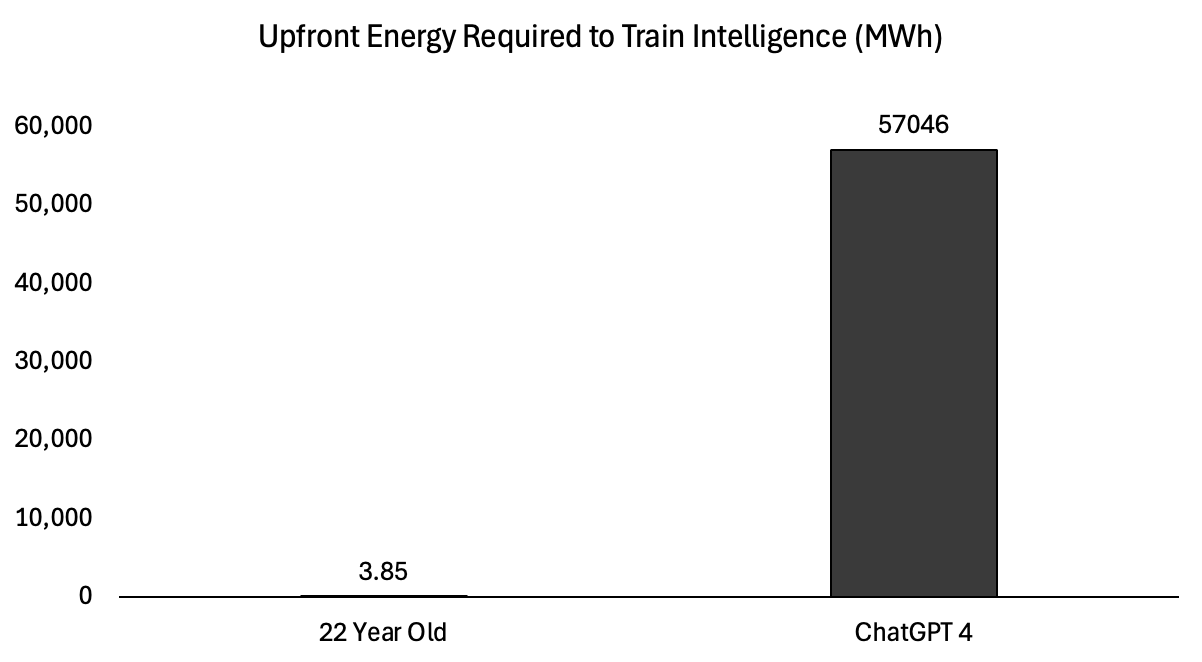
How do the marginal costs of the two compare?
The Marginal Cost of Human Intelligence
Every day, humans allocate intelligence to complete physical and mental tasks. To fuel this, we turn calories into thought and movement. The average person requires about 1,500 calories per day, which costs approximately $5.25 in the United States.1

The median salary for a full-time worker in the United States in 2025 is approximately $61,984 per year. Based on this, the marginal daily benefit of intelligence for the median worker is $169.82 per day.
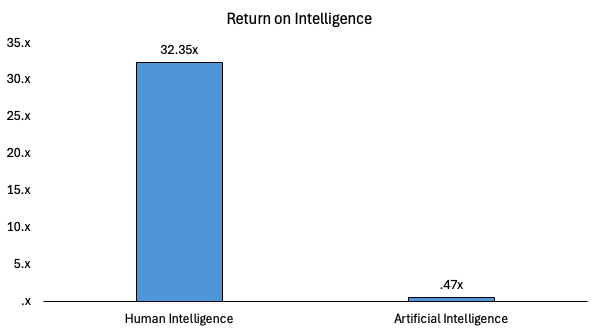
Thus, the median American earns an approximate 32.35x marginal Return on Intelligence (ROI) each day.

This ratio — income earned relative to the cost of powering the intelligence that earns it — is a useful north star for measuring economic progress. Across history, prosperity has improved by pulling on two levers:
Decreasing the cost of calories (the marginal cost of intelligence)
Increasing productivity, and thus income (the marginal benefit of intelligence)
These two levers are intimately intertwined. Decreasing the cost of calories allows humans to spend less time producing food and creates caloric surplus, enabling the transition from subsistence to specialization. Consequently, people spend more time training to learn new tasks that power higher-earning jobs, which leads to the creation of new technologies that lower the cost of calories further and increase productivity. Productivity, in this framing, is simply leverage on intelligence.
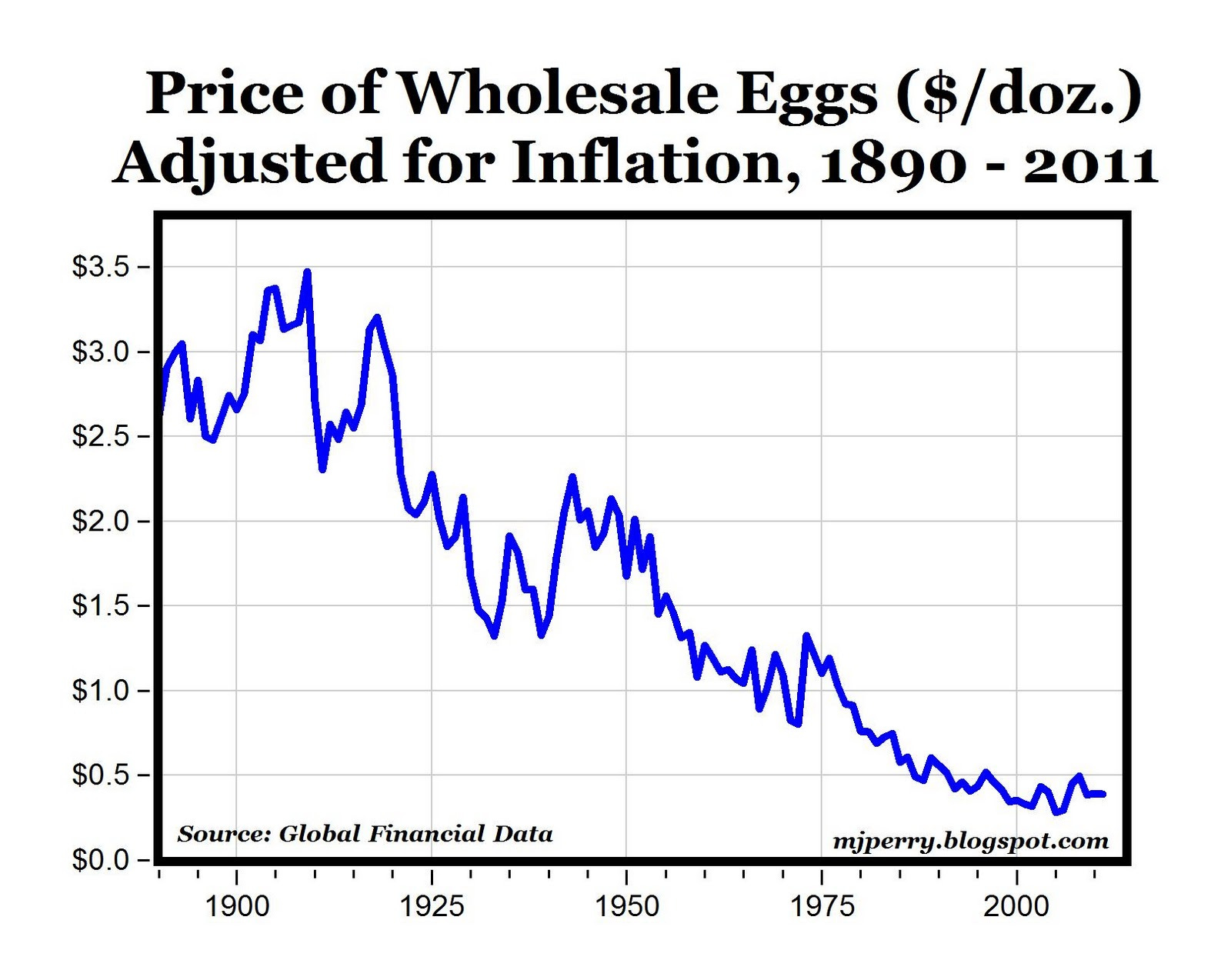
For almost all of history, improving Return on Intelligence meant finding better ways to allocate organic intelligence. But what happens when we can now turn electricity into artificial intelligence? To answer this question, we need to compare the economics of human and artificial intelligence directly.
The Marginal Cost of Artificial Intelligence
Much like human intelligence, every day, we allocate a finite amount of energy to power artificial intelligence to complete tasks.
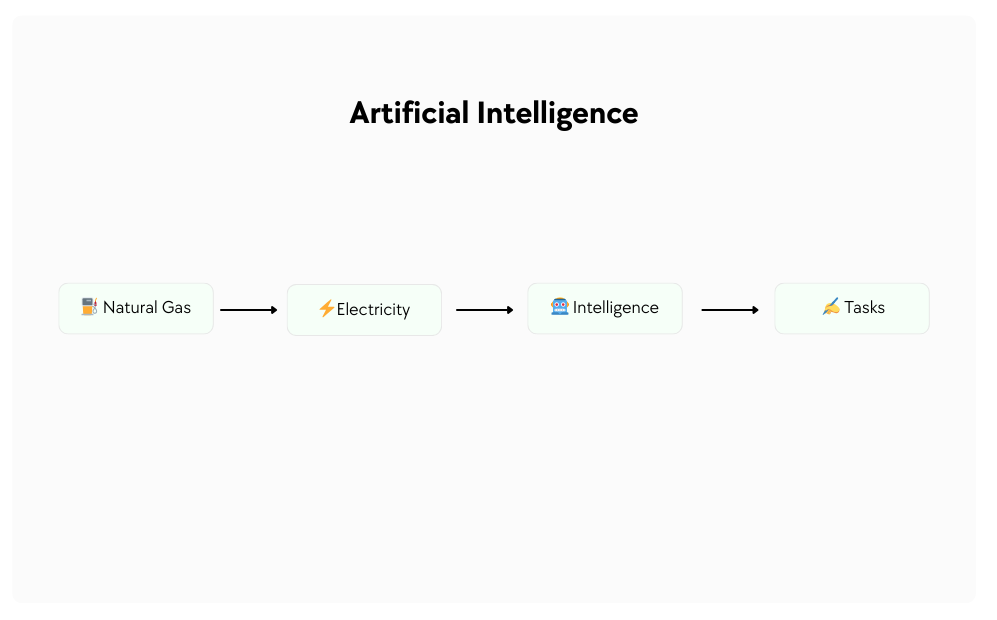
To power artificial intelligence, we turn natural gas (or coal, nuclear or solar) into electricity, and electricity into intelligence.
To understand the relative efficiency of human intelligence compared artificial intelligence, let’s seek to answer the following:
How much artificial intelligence could the daily energy consumption of the human brain power?
A helpful way to frame this is by converting human intelligence into the units of energy consumption (kWh per unit of intelligence). In other words: what is the marginal energy cost for a human to perform a task (the atomic unit of a job), versus the marginal energy cost for an AI model to generate the same output?
By translating both into the same denominator (kWh), we can begin to compare their cost efficiencies directly. This will allow us to answer the question: For every additional kilowatt-hour, how much intelligence do we get from a human compared to an AI?
The human brain consumes approximately 20 watts of power continuously — a budget that sustains perception, reasoning, learning, and creativity around the clock (even during sleep, the brain uses about 85% of its waking energy).
Thus, the daily energy consumption of the human brain:
20 watts × 24 hours = 480 watt-hours = 0.48 kWh per day
Based on the current average electricity costs in the United States2, the daily energy consumption of the human brain would cost approximately:
0.48 kWh/day × $0.13 per kWh = $0.0632 per day
To put this in perspective:
Monthly cost: $0.0632 × 30 days ≈ $1.90 per month
Annual cost: $0.0632 × 365 days ≈ $23.07 per year

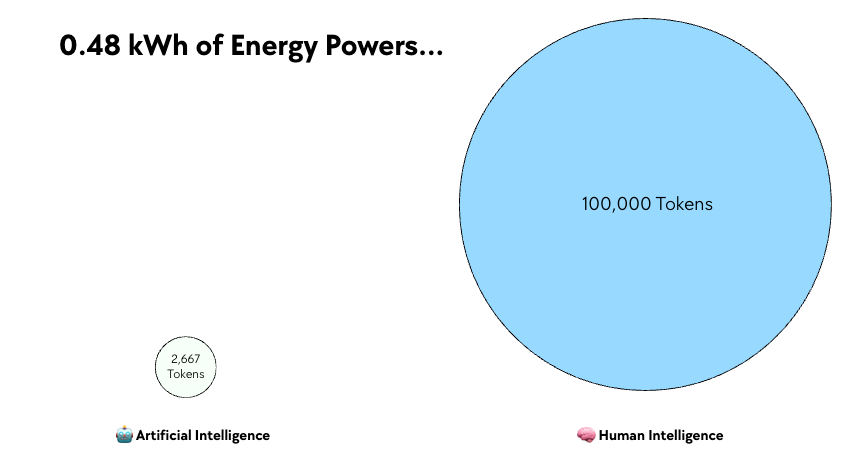
Now consider what 0.48 kWh — the same energy budget — could accomplish if allocated to artificial intelligence instead. Based on current research, GPT-4o consumes approximately 0.18–0.19 kWh per 1,000 tokens. At that rate, 0.48 kWh of electricity would produce roughly 2,667 tokens of text generation.
What can 2,667 tokens accomplish? For an influencer marketer, it could draft multiple social media posts or a client proposal. For a plumber, it could produce invoices, cost estimates, and work summaries.
These are useful tasks, but they represent a fraction of what the human brain accomplishes with the same energy. The brain produces continuous, multidimensional thought, memory, creativity, and physical coordination. On a purely energetic basis, human intelligence remains extraordinarily more efficient than artificial intelligence.3
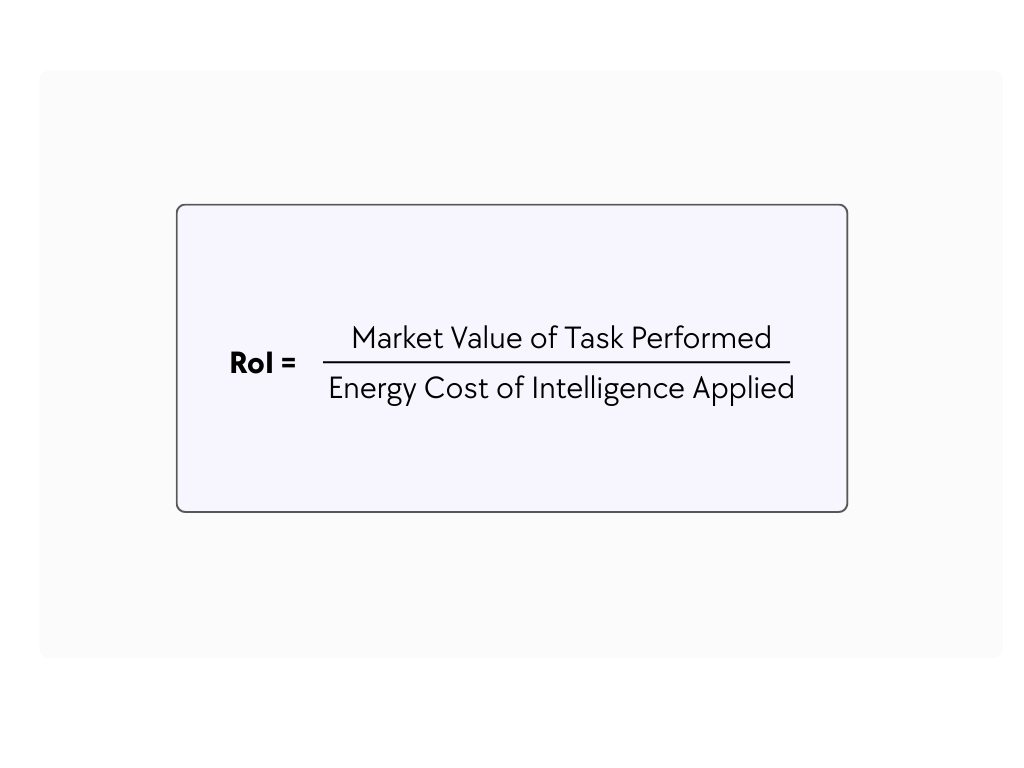
Yet focusing on energy efficiency only conducts half the analysis. Return on intelligence (RoI) is best understood as the value created by the task performed relative to the energy consumed.
Return on Intelligence (RoI): the value created per unit of energy spent on intelligence, whether by a brain or a machine.
Thus, what is the marginal benefit of the artificial intelligence compared to human intelligence?
Comparing Returns
We can pull the current cost of inference from OpenAI’s pricing to calculate what artificial intelligence earns from the equivalent daily energy budget of the human brain.
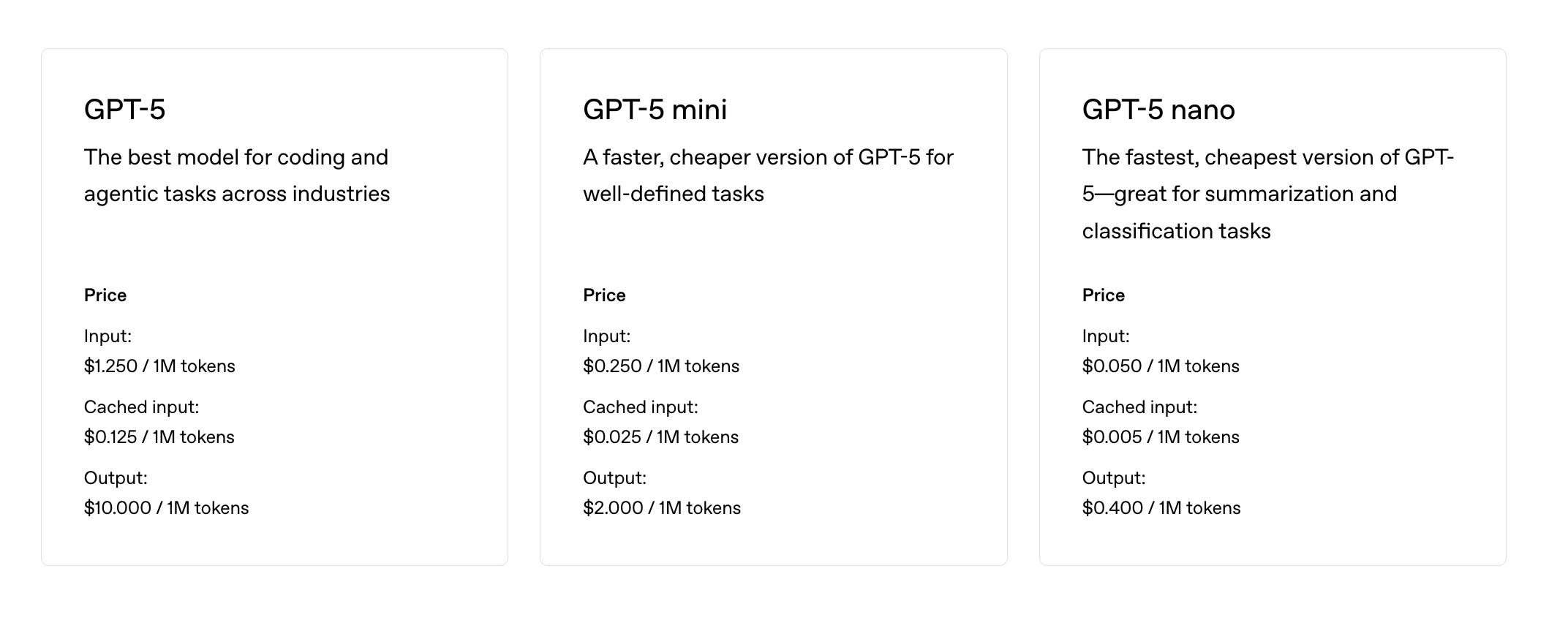
Current AI models generate approximately $0.03 in revenue from 0.48 kWh of energy, the same amount that powers a full day of human intelligence. This results in a marginal Return on Intelligence of 0.47x.

Compare this to the human figure: 32.35x. On a per-unit-of-energy basis, AI is dramatically worse than human intelligence.
Intelligence is capital, and like any capital, its value depends on how it is invested. Human and artificial intelligence both convert energy into thoughts and movement, yet the return on that energy differs radically depending on its allocation.
A Brief History of Intelligence Allocation
For most of history, the only way to scale intelligence was to feed more organisms. Where animal movement produced better returns than our own on certain tasks, we allocated calories accordingly. Donkeys pulled plows more efficiently than humans could; horses delivered goods, people, and mail faster than anyone on foot. This allowed humans to offload lower-leverage physical tasks and apply their own intelligence elsewhere. Yet both forms of intelligence — human and animal, collaborating together — were necessary for human jobs. One couldn’t be a farmer without a mule or a postmaster without a horse. Intelligence has always been bundled across human and non-humans to perform jobs.
Over time, new technologies offered more leverage per calorie. The plow became the tractor. The horse gave way to the automobile. These technologies didn’t eliminate the tasks — the hauling, plowing, and transporting still needed to happen — they shifted those tasks from organic intelligence (powered by calories) to mechanical intelligence (powered by electricity and combustion).
The economics of this shift were straightforward. In 1920s Kansas, the annual upkeep for six horses cost about $1,400, while a tractor could deliver the same output for $804. Between 1920 and 1930, American farms shed more than 6.3 million horses and mules, freeing 18–24 million acres of farmland that had been devoted to growing feed crops. Even though the price of hay fell by half during that period, farmers still abandoned horse labor — proving that what drove adoption was not the cost of the input, but the productivity of the output. Return on Intelligence, not input cost, determined how intelligence was allocated.
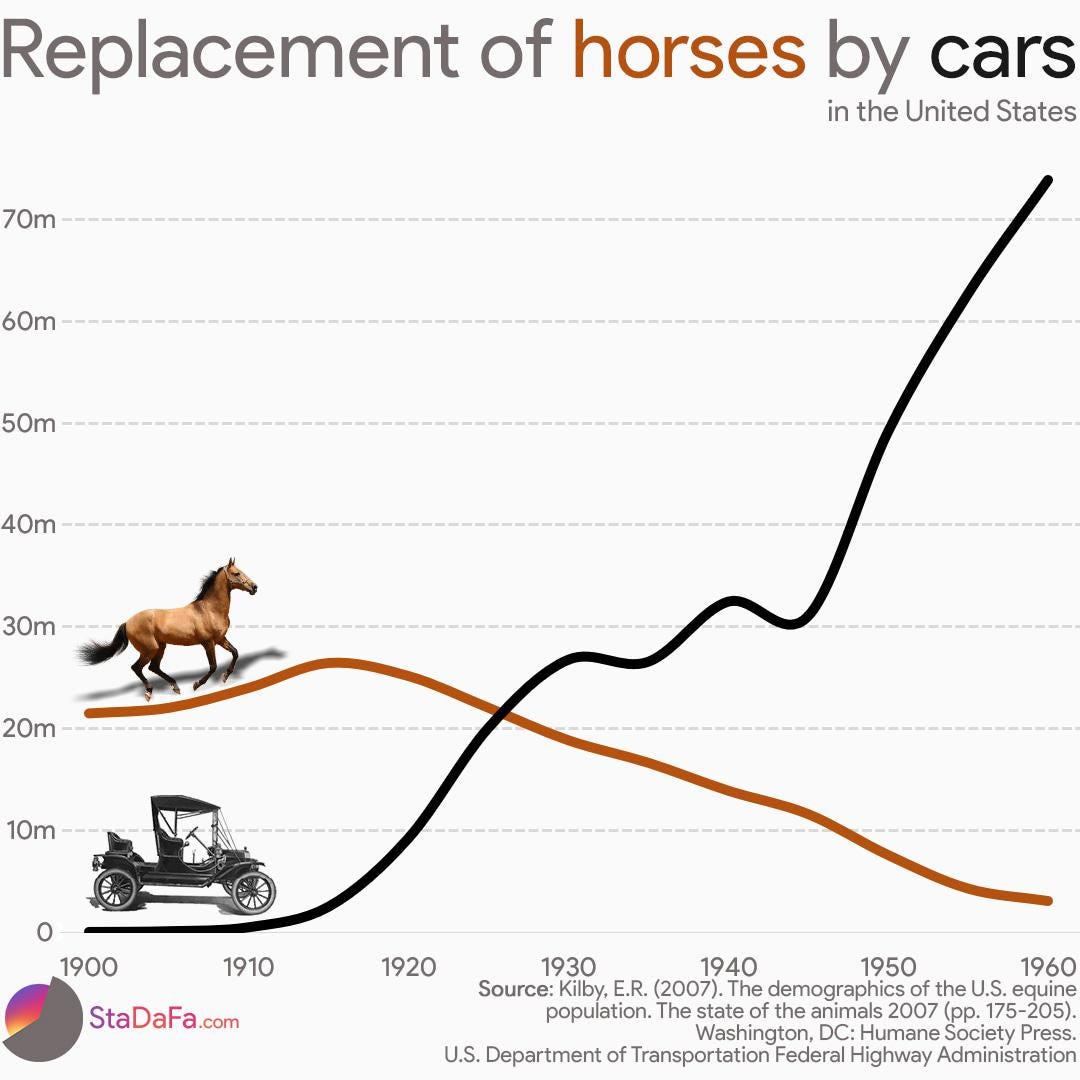
The consequences cascaded. Feed once consumed by horses was redirected to humans. Caloric supply grew, and with it, the population. Farms hired more laborers with the productivity gains from tractors and the cost savings from feeding fewer animals. As machines absorbed low-leverage physical tasks, humans focused on higher-leverage work. The reallocation was deeply deflationary and liberating — it increased productivity, lowered the cost of movement, and created net new jobs across the economy. The stablehand became the mechanic.
IV. Return on Intelligence
So far, this analysis focuses on the wrong unit of intelligence. The 32.35x Return on Intelligence we calculated earlier treats a job as a single unit — daily income divided by daily caloric cost. But no one performs "a job" in a single, undifferentiated motion. A job is a bundle of tasks, and the return on intelligence varies enormously across them. While we consume calories to power intelligence, we choose how we allocate such intelligence based on what tasks we focus on.
Consider the job of a plumber. That job consists of a bundle of tasks, including:
Answering calls from customers and coordinating availability
Documenting work performed for clients and customer notes
Managing payroll
Estimating costs and providing quotes or invoices to customers
Handling customer payments and billing
Managing inventory of parts and materials
Training apprentices or less experienced workers
Coordinating with other contractors or specialists for larger projects
Fixing a leak or a toilet
All tasks require thoughts and movements, which requires intelligence, which consumes calories, which has real marginal cost. Some tasks cost more calories than others. Yet, all tasks also have a marginal benefit on such intelligence. Importantly, some tasks are more economically productive than others.
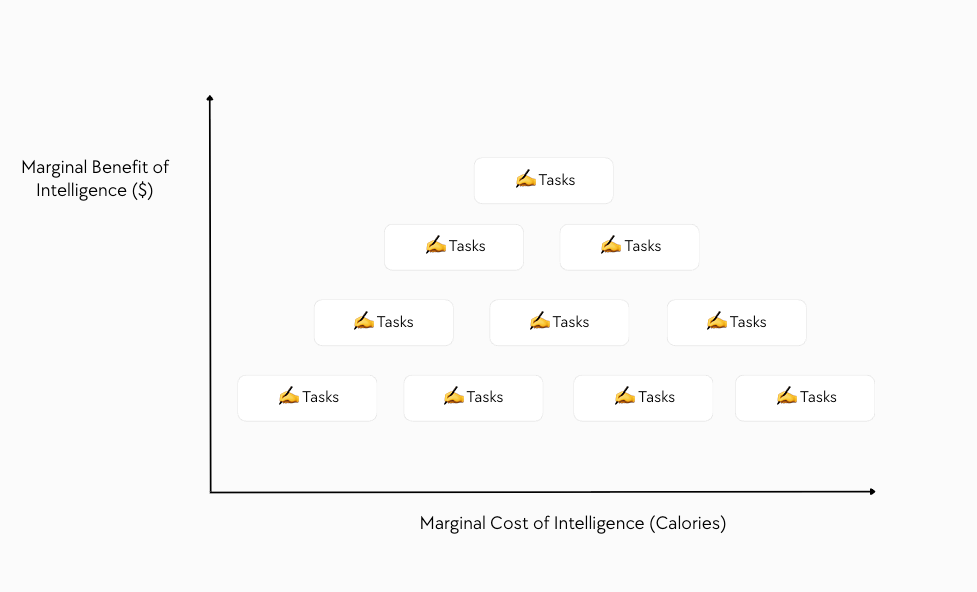
It might cost a plumber the same amount of calories to power the intelligence it takes to document job completion statuses as it does for them to fix a toilet. The marginal cost is similar. The marginal return is not. A plumber gets paid to fix toilets, not document job completion statuses. A plumber’s income is dependent on the amount of intelligence he can allocate to fixing toilets. Documenting job completion statuses is a necessary administrative tasks but acts as a drag on his productivity.
Indeed, while each allocation of intelligence has a marginal cost, it, more importantly, also has an opportunity cost — the value of the next-best task that could have been completed with the same intelligence.
Every hour a plumber spends on documentation is an hour not spent on a repair call. The real cost of low-ROI tasks is the high-ROI tasks they displace.
What makes AI so compelling is that every laborer across the economy now has access to relatively cheap and on-demand intelligence that can execute certain tasks. AI will not replace the job of the plumber, but it likely will replace the tasks of documenting job completion statuses, which thus frees of plumbers to allocate their intellgience to higher returning tasks.
Indeed, if AI automates the job documentation, the plumber can spend more time fixing toilets, which means he can earn more money and have a greater Return on Intelligence. This reveals a critical insight: the marginal Return on Intelligence is tied to the value of the tasks it executes.
This is the mechanism by which AI increases productivity, by automating the lowest-yielding tasks and enabling the reallocation of human intelligence to high-ROI tasks.
This leads to a critical question:
What is the optimal allocation of human intelligence in a given job?
V. Conclusion
Intelligence, whether organic or artificial, is an arbitrage between the cost of powering intelligence and finding the highest and best use application of such intelligence.
Every job is a collection of tasks, and some tasks have a greater marginal impact (economically, psychologically, and socially) than others. Tasks require intelligence, which requires energy, calories, and ultimately, money. For instance, writing an investment memo costs me roughly the same amount of money on a marginal basis as filling out my HubSpot, but the former is far more economically valuable. The promise of AI is that we now have on-demand intelligence that can be directed at these lower ROI tasks, freeing people to focus on higher-returning tasks within their roles.
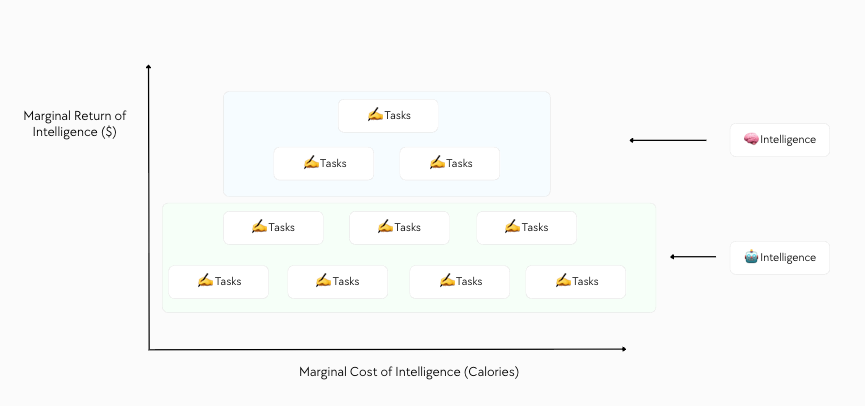
Low-ROI tasks — high cost, low return — are where AI belongs first. Doing so will allow humans to allocate their intelligence to more productive tasks, resulting in more leverage on their energy and time. As a result, people will earn more.
The plumber example illustrates reallocation within a job. But the same logic operates across jobs, and across eras. New technologies power new economic revolutions. Economic revolutions make certain jobs obsolete, but create new, higher earning jobs and increase the productivity and earning power of existing jobs. History teaches a simple lesson — jobs come and go, work does not.
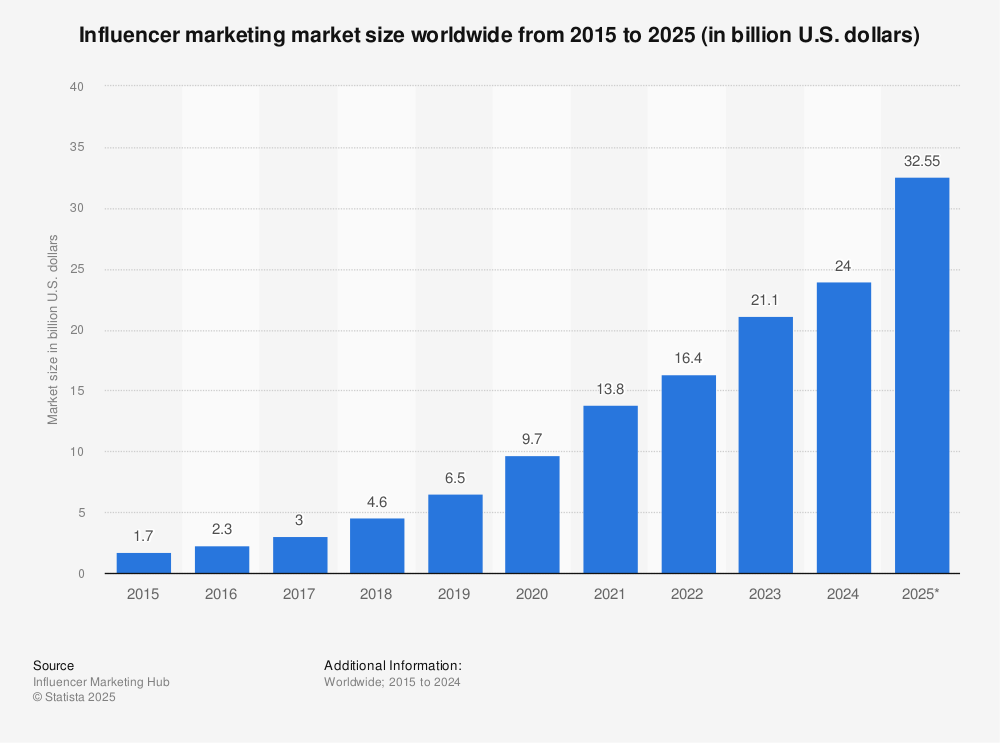
A better way to frame “work” is to use the jobs-to-be-done framework: companies hire people to achieve a specific goal or outcome. Consider the job of an influencer marketer. This job didn’t exist 15 years ago, yet influencer marketing now represents a $33B market, with the average influencer marketer earning $98,900.
What do influencer marketers do?
Influencer marketers help their company or their clients drive awareness, engagement and sales. That is the work. That work has existed as long as commerce has.
How do they accomplish this work? They do so by keeping tabs on culture, developing and executing campaigns and most importantly, building valuable relationships with influencers in their given industry of focus.
Who has these jobs? The average influencer marketer tends to be young, female, interested in culture, college-educated, lives on the coasts, and seeks a decent paying job that isn’t too demanding, in a fun work environment that relies a lot on interpersonal relationships. Twenty or thirty years ago, the same work was accomplished by people at newspapers, publishers, magazines, ad agencies, and in-house marketing departments.
Yet, we have seen how technology has disrupted the dissemination of information, consequently, the arbiters of culture and entertainment diffused from magazines and newspapers to individuals. Fundamentally, these businesses are downstream of attention; the advent of the Internet, smart phones and social media led to attention to shift from the analog to the digital.
Said more pithily, the death of the newspaper led to the birth of the influencer marketer. The work remained the same, but the new job accomplished it more effectively — more targeted, more measurable, more relational.
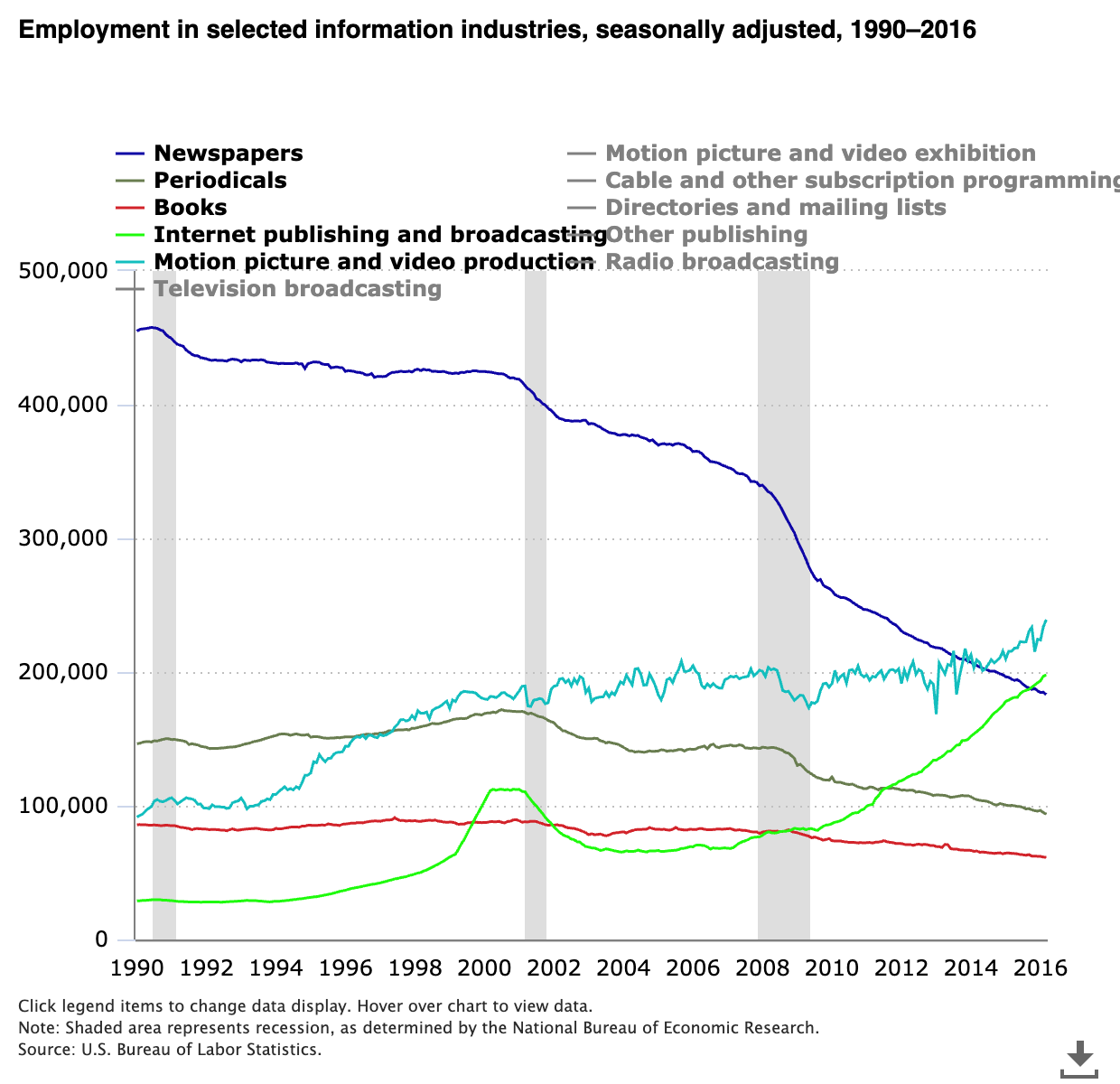
As a result, influencer marketers earn roughly 2x what the average newspaper or magazine employee earned. The same human intelligence — cultural intuition, relationship-building, creative instinct — is now allocated to a higher-returning method of accomplishing the same work. Carrie Bradshaw from Sex and the City would be an influencer today, not a columnist. Her job would be different, but her work would be fundamentally the same.
Will the hiring of humans to help companies drive awareness, engagement and sales be replaced by AI?
No. Such work depends on social proof, emotional intelligence, personality, and relationships. These are irreducibly human capacities. But AI will change the job by absorbing the low-ROI tasks within it: drafting campaign briefs, generating content variations, analyzing engagement metrics, managing scheduling. This frees the marketer to spend more time on what actually drives results — the relationship-building, the cultural judgment, the creative instincts.
The pattern is the same as the plumber’s, and the same as the farmer’s before that. Much like capital, intelligence flows toward its highest return. The tasks that remain human are the ones where human intelligence has a comparative advantage. Everything else gets reallocated.
The Optimal Allocation
This essay began as a set of questions I emailed myself. What is the highest economic return on human intelligence for a specific market or job, and what is preventing (a) individuals and teams from allocating more energy on it and (b) management from allocating more capital towards it?
This leads to a framework for thinking about any job in the age of AI. Every job can be decomposed into its constituent tasks, and each task can be evaluated on two dimensions: the marginal cost of the intelligence required to perform it, and the marginal return that task generates. The tasks with the lowest ratio of return to cost — the administrative drag, the formatting, the status reporting, the compliance paperwork — are where AI belongs first.
In every era, intelligence — whether human, animal, or artificial — has been reallocated toward its highest return. This essay argues that AI is best understood as an economic event, not a technological one. It lowers the marginal cost of intelligence, unbundles jobs into their atomic tasks, and forces us to allocate human intelligence where it yields the greatest return. What appears at first like job destruction is, in fact, a re-bundling of tasks into higher-yielding forms of work. In doing so, AI will accelerate the historical cycle: increasing productivity, raising incomes, and expanding the frontiers of human possibility.
To simplify the analysis, I’m focusing on calories as the primary input to the marginal cost of intelligence. A more complete model would include the cost of water, shelter, and safety — all necessary to sustain the biological systems that produce intelligence.
That is on a marginal basis, purely accounting for the cost of electricity, not including any variable or fixed costs relating to developing chips, or building, servicing or cooling data centers.
The claim that human intelligence is more energy-efficient deserves a caveat: brains and language models produce fundamentally different kinds of output, making direct comparison imperfect. The brain’s continuous, embodied cognition and the discrete token output of an LLM are not perfectly commensurable. The energy comparison is useful as a rough frame, not a precise equivalence.
Amazing content, Sam!
Love this!